
I’m fairly convinced that most of what divides us as a country is a failure in language usage. I know this might sound a little silly, and certainly easy to overcome, but I’m convinced that the bubbles we’re stuck in have different dialects. Of course, I’m not an expert in languages and I’m not saying they’re really different dialects, but I bet if we stopped using certain words to describe things, and talked about what it is that we want or don’t want, there would be a lot less room between us. A leader who could break through that could do a lot for the country. What exactly am I talking about? Here are some examples.
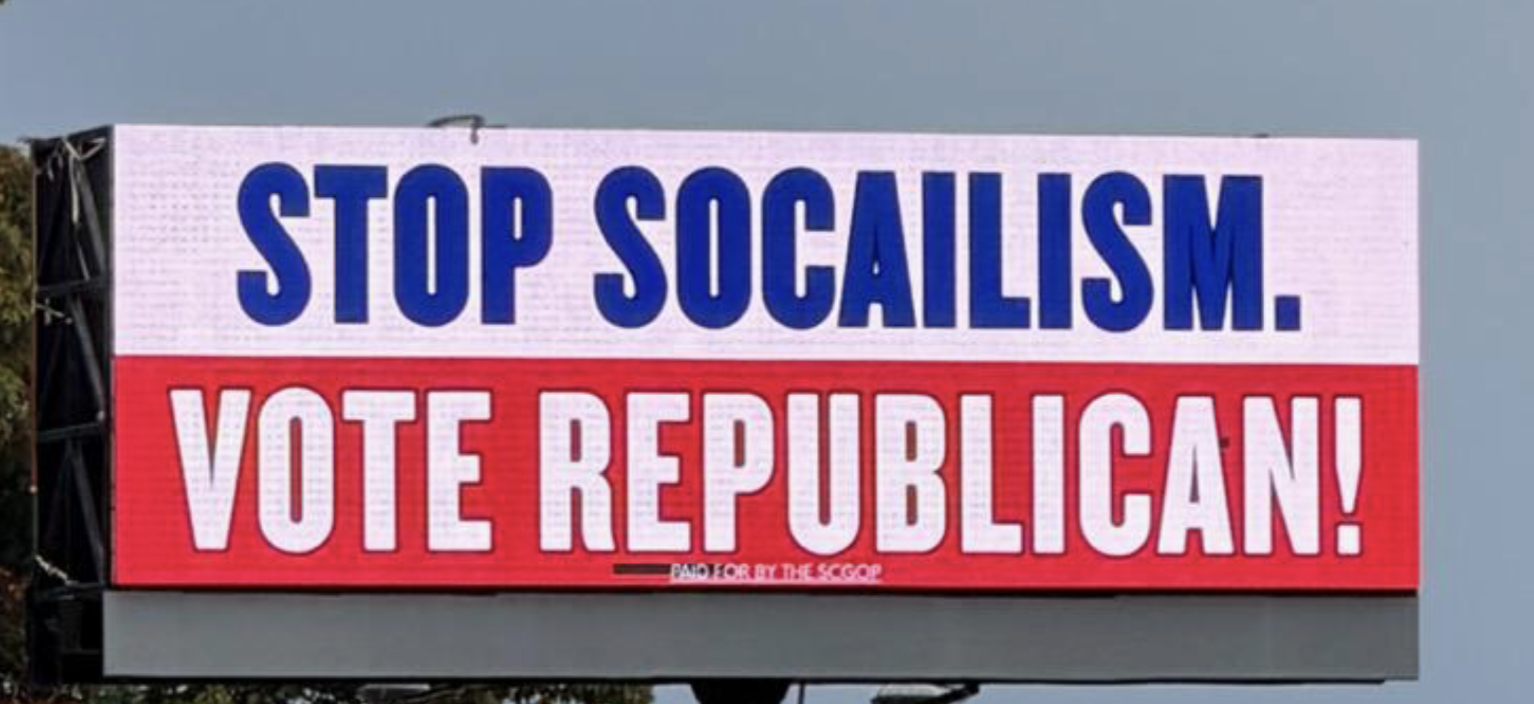
Socialism. This is an obvious one. I’ve written about where I stand on economic issues before (see here). Socialism is a clear dividing point. On the way to work today (in upstate South Carolina) I passed a billboard that read something like, “Stop Socialism. Vote Republican.” Socialism, or the desire for it, divides us. But what do people mean when they use that word? To me, it means an economic system in which the government owns and operates entities that provide goods and services. It sits on a continuum with capitalism, which is an economic system in which private individuals own and operate entities that provide goods and services. Using this definition, the United States is a hybrid economy. We have plenty of government owned and operated entities that provide goods and services. We have a government owned and operated military. We have government owned and operated libraries. We have government owned and operated roads and retirement plans and health insurance and hospitals and research centers and ports and fire houses and police stations and mail/package delivery and trains and electric companies and prisons and banks. But very little of this is purely government owned and operated because all of these entities have various levels of partnership with private entities also. Nevertheless, when I talk about “socialism,” this is what I’m talking about. But when folks outside my world talk about socialism, they mean North Korea. They mean a system where everything is under the thumb of the government, and, perhaps more importantly, they are thinking of a government that is not elected or that is elected in a way that is not trustworthy.
I would bet a pretty large sum of money that if you took the word “socialism” out of the picture, and asked people if they were for or against the government being fully in charge of the military, as opposed to military operations being performed exclusively by private companies, a very large majority would side with the government option. Maybe I’m just in a bubble, and I’m sure that there are varying degrees to which we might want private companies contracting with the government to provide things the military does, but I think we all agree that the operations and command should be in the hands of the government. I don’t think anybody wants national defense to be entirely in the purview of a private company that makes their own decisions about when and how to protect us, or when and how to wage wars against other countries. Either way, I would be surprised if there were huge swaths of the American public would read my earlier post about capitalism and socialism mixes and think this is the wrong way to go. Again,
If we take the word “socialism” out of the equation, I bet we’re in a lot more agreement than it sounds when you listen to political ads on TV.
DEI. I’ve written about this before also (see here). I’m not sure I have all that much more to say than I did before, but in case you don’t want to click on the link and go to the past post, here’s the basic idea. When some people say “DEI,” they mean giving opportunities to black/brown people just because of their race. It means hiring unqualified people for the sole purpose of increasing the number of black/brown people on the payroll. When others use “DEI,” they mean being aware of the myriad reasons that black/brown people have been kept out of the workplace. They mean being aware of the things we do that seem innocent enough, but that keep us in a white workforce. Paying attention to “fit” and “culture” of a workplace when making hiring decisions, and how that leads to hiring people who are just like us (just like us in ways that aren’t critical for the work).
I would bet that most people would say that not hiring somebody just because s/he is black would be wrong. I would also bet that most people would say that hiring somebody just because s/he is black would be wrong also. For some, DEI is about hiring unqualified minorities for jobs. For others, DEI is about making sure that the qualified black/brown person doesn’t come in second to the unqualified white guy. Setting aside genuine racists, it’s hard for me to imagine that we aren’t really on the same page here, if we took “DEI” out of the conversation and just talked about what we meant when we used the acronym. Again, maybe I’m wrong, but that’s my hunch.
Woke. This is just another entry in a long list of ways that the right has mocked and demonized kindness and understanding. In fairness, I can’t defend some of what seems like silliness on this from the left (https://www.youtube.com/watch?v=zefpFf46kAM), but from political correctness to woke culture, one side is mocking others and the other side is trying to empathize with them. Here, I’m not sure that we’re as aligned as I think we actually are with “DEI” and “socialism,” but I still think there are some fundamental things we can agree on. I bet we all think it’s a good thing to be respectful and kind to each other. I’m pretty sure that if you surveyed 1,000 registered republicans and asked if they support or oppose the statement, “being kind and respectful is a good thing,” almost all of them would click/say support. For many on the left, being “woke” is just being aware of the differences that others experience. It’s waking up to see what it’s like. Again, I bet if you surveyed 1,000 registered republicans and asked them to agree or disagree with a statement like, “I try to better understand the world around me,” almost all would say they agree. For me (and I think a lot of left-leaning folks), there’s no difference between being somebody who tries to understand the world around us, and the experience of people in that world who might be different from us, and being “woke.” That is, until the term was bastardized and turned into something bad. But, like the other things here, I bet if you took “woke” out of it and described it how the left does, without using the term “woke,” most folks on the right would not only say that it’s a good thing, but that it’s how they think of themselves. Similarly, if you described what folks on the right think when they say “woke,” but without using the word, I bet most people on the left would say they don’t like that either.
I have to admit that when thinking about this, I assume an objective truth or something that’s correct, and it’s easy for me to point fingers toward the right and accuse them of doing something wrong. I do believe there is a true definition of “socialism” for example and this belief is supported by dictionaries and text books. Logically, it’s hard for me to not see the folks on the right who attack socialism as the ones misusing the word. I’m a product of my own experiences and biases for sure, but I simply can’t find a source that defines “socialism” the way that folks on the right use it. I try very hard not to fall into the Trump-supporters-are-dumb camp, but I often understand why some people come to that conclusion. I mean, if I started complaining about the solar system, when I was talking about recessed lights in my house, people would think I was a little strange, and maybe not so bright. But the Vice President was asked to define socialism and he said it means “that you want to replace American workers with foreign workers, and you want boys to play in girls sports.” If I were grading his exam, I don’t think I would have given him any partial credit for that incorrect answer.

